
Customers often ask whether our silent pumps and cleaning machines use 2-pole or 4-pole motors. Today, we’ll break down the differences, advantages and disadvantages of low-speed, medium-speed and high-speed motors.
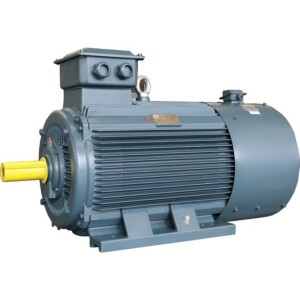
In the power tool industry, low-speed motors are rarely used. Most of our products adopt 2-pole motors (2,820 RPM) and 4-pole motors (1,480 RPM).
First, let’s clarify the relationship between motor poles and rotational speed:
- 2-pole motor ≈ 3,000 RPM
- 4-pole motor ≈ 1,500 RPM
- 6-pole motor ≈ 1,000 RPM
- 8-pole motor ≈ 750 RPM
1. Torque
- Low-speed motors: High torque. For the same power output, the lower the rotational speed, the higher the torque.
- Medium-speed motors: Moderate torque, striking a balance between rotational speed and power output.
- High-speed motors: Low torque, designed for high-speed operation.
2. Size & Weight
With the same power rating:
Low-speed motor > Medium-speed motor > High-speed motor
Low-speed motors feature larger iron cores and windings, resulting in bulkier and heavier bodies.
Low-speed motor > Medium-speed motor > High-speed motor
Low-speed motors feature larger iron cores and windings, resulting in bulkier and heavier bodies.
3. Noise & Vibration
- High-speed motors: Higher rotational speed leads to greater noise and vibration, with faster bearing wear.
- Medium-speed motors: Run smoothly with low noise, delivering the overall best performance.
- Low-speed motors: Produce the least vibration and noise.
4. Efficiency & Heat Dissipation
- Medium-speed motors: Boast the highest overall efficiency and excellent heat dissipation.
- High-speed motors: Large air volume facilitates heat dissipation, yet bearings and coils tend to heat up excessively.
- Low-speed motors: Low rotational speed results in poor self-air cooling; high-power models are prone to overheating.
5. Cost
For the same power rating:
Low-speed motors have the highest production cost, medium-speed motors are the most cost-effective, and high-speed motors come in second.
Low-speed motors have the highest production cost, medium-speed motors are the most cost-effective, and high-speed motors come in second.
Application Scenarios
Low-speed Motors (≤750 RPM)
Features: High torque, low rotational speed, stable operation
Applications: Conveyors, ball mills, winches, mixers, large fans, hoisting equipment, etc.
Applications: Conveyors, ball mills, winches, mixers, large fans, hoisting equipment, etc.
Medium-speed Motors (960 ~ 1,480 RPM)
Features: Well-balanced performance, durable, high cost performance, wide versatility
Applications: Water pumps, general fans, machine tools, air compressors and most standard industrial equipment (the mainstream motor type)
Applications: Water pumps, general fans, machine tools, air compressors and most standard industrial equipment (the mainstream motor type)
High-speed Motors (≥2,900 RPM)
Features: High rotational speed, low torque, quick response
Applications: Small fans, grinders, cutters, centrifuges, precision spindles, small household appliances, etc.
Applications: Small fans, grinders, cutters, centrifuges, precision spindles, small household appliances, etc.