
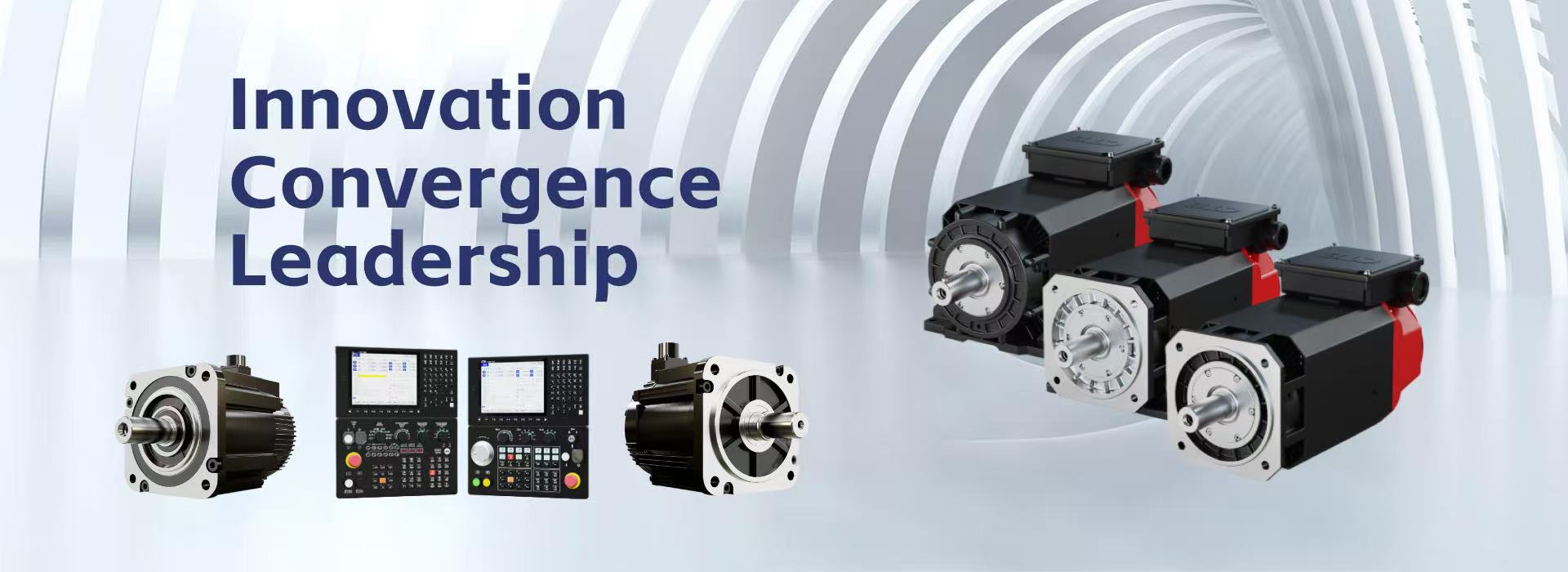
Servo motor selection constitutes a critical link that determines system performance throughout the design process of automated equipment. From high‑speed cutting in CNC machine tools to flexible operation of industrial robots, from micron‑level positioning for semiconductor packaging to synchronous flying‑shear applications on packaging production lines, servo motors are indispensable for nearly all automation scenarios demanding precise position, speed and torque control. Nevertheless, confronted with a vast array of models and complicated technical parameters on the market, how to select an appropriate servo motor for a specific application scenario? Systematic evaluation shall be conducted from two dimensions: requirement matching and system coordination. This paper systematically sorts out the core criteria for servo motor selection from five perspectives: application‑scenario positioning, power matching, environmental adaptability, brand selection, as well as verification and optimization.

I. Application Scenario and Core Requirement Positioning
The core value of servo motors lies in precision control — accurate output across position, speed and torque dimensions. Requirements for control accuracy vary drastically among different application scenarios. Defining the core control objectives of the scenario is the first step in motor selection.
Typical application scenarios for servo motors include CNC machine tools, industrial robots, semiconductor equipment, packaging machinery, medical instruments and automated logistics lines. Within the robotics sector, servo motors are widely deployed in various robots requiring precise control, such as industrial robots, service robots and medical robots. Lithium‑ion battery equipment, photovoltaic equipment, high‑end CNC machine tools and small‑scale CNC machine tools also represent major application fields for servo motors.
Performance‑indicator requirements differ significantly across scenarios. Semiconductor packaging equipment may demand positioning accuracy at the micron or even nanometer level, whereas general‑purpose packaging machinery may only require ±0.1 mm accuracy. Highly dynamic‑response applications, such as collaborative robots and high‑speed pick‑and‑place equipment, call for fast start‑stop capability and low rotor inertia. Therefore, the initial selection step is to clarify the core control objective of the target scenario: whether priority is given to accuracy, speed or torque, together with specific dynamic‑response requirements.
II. Matching of Power and Load Characteristics
After defining the application scenario and core requirements, precise matching of power and load characteristics shall be performed. Servo motor selection hinges on the triangular balance of torque‑speed‑inertia.
1. Torque Calculation and Selection
Torque stands as the primary factor determining servo motor specifications. Two key indicators shall be emphasized during selection:
Continuous‑rated torque: The maximum output torque at which the motor can operate stably on a continuous basis. Selection principle: The steady‑state load torque shall be lower than the motor’s rated torque, with a safety margin of 20 %‑30 % generally recommended.
Peak torque: The maximum short‑term output torque (typically within 10 seconds), usually 2‑3 times the rated torque. It copes with transient high‑load conditions including startup, acceleration and abrupt load changes. Ensure that the peak load torque does not exceed the motor peak torque.
Total torque requirement consists of constant‑speed torque and acceleration torque. Constant‑speed torque overcomes sustained resistance such as friction, cutting force and gravitational‑force components. Acceleration torque provides the force to set the load in motion. For frequent‑start‑stop applications, acceleration torque often dominates and must not be overlooked.
2. Confirmation of Speed Range
Servo motors commonly feature rated speeds of 2000‑3000 rpm, while their maximum speed can reach two to three times the rated speed. Selection principle: The maximum operating speed of the load must be lower than the motor maximum speed, with a 10 %‑20 % margin generally advised. For high‑speed applications such as spindle drives, maximum speed — rather than rated speed — serves as the decisive selection parameter.
3. Inertia Matching: An Easily Overlooked Key Parameter
Inertia matching forms the prerequisite for stable servo‑system operation. The ratio of load inertia to motor rotor inertia (inertia ratio) directly governs system response speed, positioning accuracy and stability.
High‑precision scenarios (e.g. precision grinding machines, semiconductor equipment): Inertia ratio is recommended to stay within 3:1 for fast response and accurate positioning.
General‑industrial scenarios (e.g. general‑purpose automated equipment): The inertia ratio may be relaxed to 5:1‑10:1.
Heavy‑load scenarios (e.g. large gantry machining centers): Moderate relaxation is permissible, yet the inertia ratio should generally not exceed 10:1.
Excessively high load inertia (more than 10 times motor rotor inertia) slows down motor control response and tends to trigger oscillation and overshoot. Two solutions are available: select a higher‑inertia motor (at higher cost), or adopt a reducer to reduce equivalent inertia on the load side. For instance, a CNC machine‑tool X‑axis with an inertia ratio of 15:1 delivered a positioning time of 800 ms; after a reducer reduced the inertia ratio to 6:1, positioning time dropped to 200 ms.
III. Functional Expansion and Environmental Adaptability
Beyond power matching, functional‑expansion demands and operating environment constitute non‑negligible dimensions for selection.
1. Holding‑brake Requirement
Where position retention is required upon power‑off or static conditions (e.g. vertical motion axes, high‑altitude work platforms, lifting mechanisms), servo motors equipped with electromagnetic holding brakes are mandatory. The brake holding torque shall exceed the maximum load torque; a value ≥ 1.5 times the maximum load torque is generally recommended to prevent slipping.
2. Protection Class and Environmental Protection
Operating environment dictates the required motor protection class. The IP rating is a hard requirement for servo motors deployed in industrial settings with dust, water vapor or oil mist. Standard servo motors normally achieve IP65 rating for dust resistance and water‑spray resistance. Higher‑grade protection is required for special environments:
Food‑processing equipment: IP67 (short‑term immersion resistance);
Outdoor logistics equipment: Dust‑proof and anti‑vibration design (IP66+);
High‑temperature environments: Insulation class F or above for high‑temperature resistance.
Cooling modes also merit attention. Servo motors adopt three cooling schemes: natural cooling (fan‑less), forced air cooling and water cooling. Natural cooling applies to low‑power and low‑speed applications; forced air cooling suits medium‑power general‑purpose applications; water cooling is adopted for high‑power‑density or high‑temperature‑environment applications.
3. Compatibility of Control Interfaces and Communication Protocols
Servo drives must match communication protocols of host controllers (PLCs, motion controllers). Mainstream protocols include EtherCAT, CANopen and Modbus. For high‑precision applications, multi‑turn absolute encoders (resolution ≥ 23 bit) are preferred to avoid position loss upon power failure.
IV. Brand Selection and Service Capability
Numerous servo‑motor brands are available on the market. Brand selection shall comprehensively evaluate technical strength, product‑line coverage and service capacity. Major market categories are listed below:
High‑end European & American brands: Mature technologies, support for sophisticated motion control such as electronic cam and interpolation; suitable for high‑end manufacturing including automotive and semiconductor industries.
Japanese brands: Competitive cost‑performance and solid stability; widely applied in 3C electronics and general‑purpose automation equipment.
Emerging domestic brands: Rapid technological advancement in recent years; several brands have achieved performance comparable to international benchmarks.
MOTEC (China) has devoted more than a decade to motion‑control R&D and design. Its product portfolio covers AC servo motors, DC servo motors, stepper‑servo motors and integrated stepper drive systems. Its servo drives and motors feature high dynamic response and high‑precision positioning, with in‑depth optimization tailored to local‑market requirements. MOTEC delivers full‑lifecycle technical support covering selection consultation, parameter configuration, on‑site commissioning and after‑sales maintenance, serving as an excellent option for domestic substitution.
V. Verification and Optimization
Upon completion of preliminary selection, performance shall be verified through practical testing:
Load‑characteristic test: Simulate start‑stop and variable‑speed cycles under real‑world working conditions; record torque curves and response time.
Environmental test: Validate reliability under extreme conditions including high temperature (+50 °C), low temperature (−20 °C) and vibration.
Long‑duration operation test: Run continuously for a defined period; monitor temperature rise, noise and wear conditions.
Adjust parameters (e.g. PID gains, filter time) according to test results. Upgrade motor specifications or optimize transmission systems if necessary.
VI. Conclusion
The essence of servo‑motor selection lies in systematic matching among requirements, performance and environment. Accurate calculation of load parameters with adequate safety margins is essential for selection. For commissioning, follow the principle: auto‑tune first, then manual adjustment; low‑speed operation first, then high‑speed operation. Proper motor selection not only guarantees equipment operating performance, but also effectively controls full‑life‑cycle costs and avoids the pitfalls of “over‑specification” or “under‑rated sizing”.