
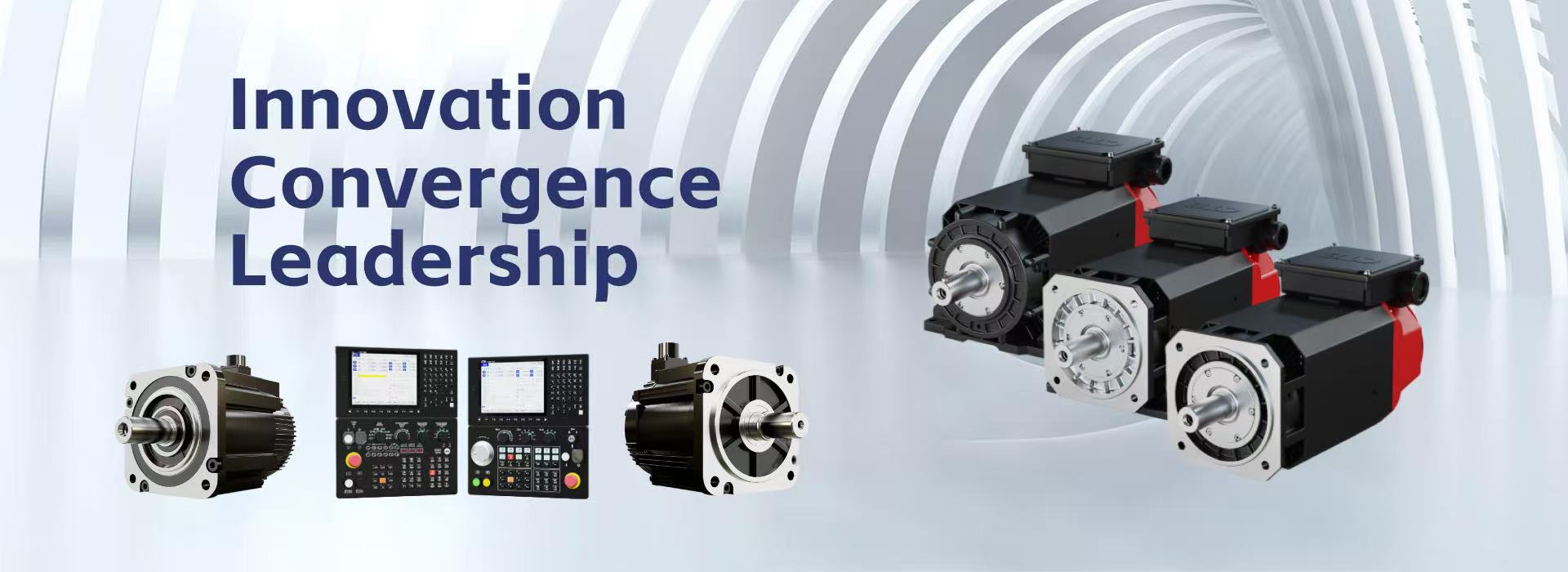
Driven by new energy vehicles, industrial automation, high-end equipment manufacturing, and intelligent manufacturing, the high-speed motor spindle—a core functional component for precision machining—is entering a golden period of technological iteration and market expansion. The industry as a whole is advancing in five major upgrade directions: high-speed, high-precision, intelligent, automotive-grade, and green. Domestic substitution is accelerating across the board, and leading local enterprises, leveraging their technological and supply chain advantages, are rapidly breaking the monopoly held by foreign brands.
01
Current Development of the High-Speed Motor Spindle Industry:
Surging Demand and Technological Upgrading in Parallel
Market Size: Steady Growth with Consistent Data
In 2023, China’s high-speed motor spindle market was valued at approximately 12 billion yuan; by 2025, it had reached 16 billion yuan, with a stable annual growth rate of 10%–12%. It is expected to exceed 20 billion yuan by 2028. Downstream applications including new energy vehicle component processing, woodworking machinery, high-end machine tools, and precision engraving and milling account for over 80% of the market, with woodworking and new energy scenarios seeing the fastest demand growth.
02
Accelerated Technological Iteration, High-End Products Become the Competitive Focus
The current technological evolution of the industry exhibits three major characteristics:
Precision Upgrade: Mainstream products achieve positioning accuracy of ±0.005mm, while high-end products break through to the nanometer level, meeting the demanding requirements of aerospace and semiconductor precision processing;
High-Speed Breakthrough: High-end high-speed motor spindles reach rotational speeds of over 60,000 rpm, with ceramic bearings and oil-air lubrication technology becoming widespread, balancing high rigidity and low vibration;
Reliability Improvement: Mean Time Between Failures (MTBF) has increased to 12,000 hours, with resistance to extreme temperatures ranging from -40°C to 150°C and strong vibration resistance. Automotive-grade IATF 16949 and military-grade certifications have become entry tickets to the high-end market.
03
Accelerated Domestic Substitution, Local Enterprises Embrace Development Opportunities
In the past, the high-end high-speed motor spindle market was long dominated by German and Japanese brands. Today, the localization rate of mid-to-high-end products by domestic enterprises has reached 58%, with the mid-range market share exceeding 65%. However, the industry still faces pain points such as reliance on imports for core ceramic bearings and high-speed drive modules. Enterprises with full-industry-chain independent and controllable capabilities will gain a competitive edge.
04
Future Trends in the High-Speed Motor Spindle Industry
Five Directions Reshaping the Competitive Landscape
1. Intelligence and Digitalization: From “Power Component” to “Intelligent Sensing Unit”
Starting from 2026, high-speed motor spindles will come standard with built-in sensors, enabling real-time monitoring and fault warning of temperature, vibration, and rotational speed. Digital twin technology will be applied to full-lifecycle management, adapting to the unmanned production requirements of Industry 4.0.
2. Automotive-Grade Standardization: New Energy Vehicles Become the Core Growth Driver
New energy vehicles impose stringent requirements on the safety and consistency of high-speed motor spindles. AEC-Q200 certification, zero-defect production, and full-lifecycle traceability will become industry standards. Enterprises with automotive-grade mass production capabilities will seize the market high ground.
3. Material and Process Innovation: Balancing Cost Reduction, Efficiency Improvement, and Performance Breakthroughs
The popularization of silicon nitride ceramic bearings, nano-lubricating films, and plasma nitriding processes reduces temperature rise by 40%; permanent magnet synchronous motors replace asynchronous motors, cutting energy consumption by 30%, aligning with the “Dual Carbon” strategy.
4. Customization and Integration: One-Stop Solutions Become the Trend
Downstream demand is becoming increasingly segmented. The product model combining “standardization + customization,” as well as integrated solutions for spindles, drives, and cooling systems, has become the key to differentiated competition among enterprises, testing rapid R&D and delivery capabilities.
5. Green and Lightweight: Low-Carbon Manufacturing Becomes Industry Consensus
Starting from 2026, the IE4 energy efficiency standard will become mainstream. The application of lightweight materials reduces the weight of high-speed motor spindles by 20% while lowering carbon emissions, meeting the green transformation needs of high-end manufacturing.